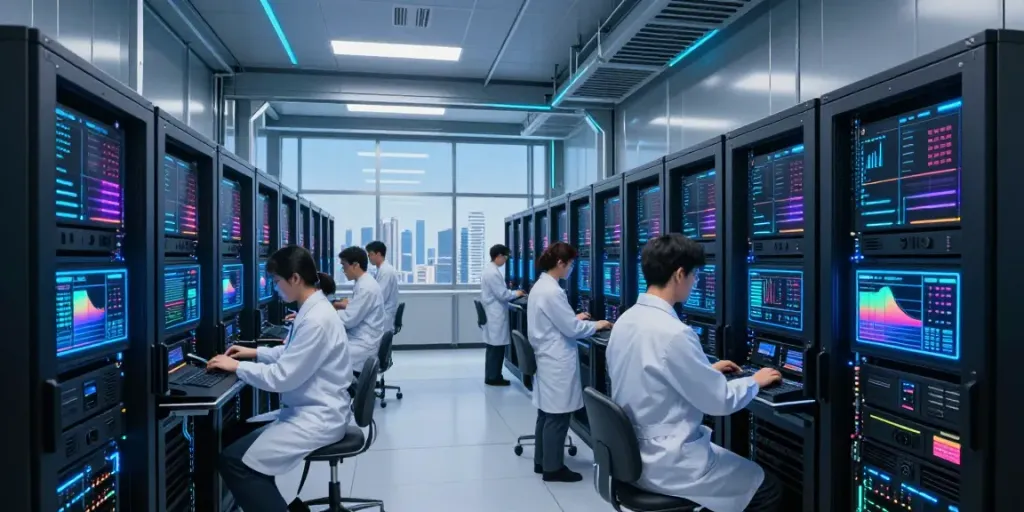
Understanding AI Data Centers
As the demand for artificial intelligence (AI) applications continues to soar, the need for specialized computing solutions has led to the emergence of AI data centers. These facilities are not just traditional data centers turned up a notch; they are purpose-built environments tailored specifically for AI workloads, which require substantial computing power and efficient resource management. The core function of an AI data center is to optimize the training, deployment, and execution of AI models, accommodating the unique demands of these processes.
When exploring options, AI data center provide comprehensive insights into how businesses can harness AI technology to streamline operations and drive innovation.
What Defines an AI Data Center?
An AI data center is essentially a facility designed to accommodate high-performance computing, primarily leveraging Graphics Processing Units (GPUs) for intensive tasks. Unlike traditional data centers that might include a mix of hardware for various applications, AI data centers focus on the unique requirements of AI processes, such as deep learning and machine learning. They typically feature high-density configurations, cooling systems capable of managing the heat generated by dense GPU arrays, and advanced network architectures to ensure quick data transfer and low latency.
Key Components of AI Infrastructure
The foundational components of an AI data center encompass several critical elements:
- High-Performance Computing Units: AI data centers utilize powerful GPUs or Tensor Processing Units (TPUs) that excel in parallel processing, essential for handling the massive datasets AI applications often require.
- Storage Solutions: Given the large volumes of data processed, AI data centers must implement advanced storage systems that can manage high throughput and rapid access times, often utilizing flash storage solutions.
- Networking Equipment: Fast and reliable networking is paramount; thus, AI data centers are equipped with optimized network architectures, including high-speed switches and routers, to minimize bottlenecks.
- Power Management Systems: These facilities need robust power management capabilities to ensure continuous operation, given the high energy demands of AI workloads.
Benefits of Transitioning to AI Data Centers
Transitioning to dedicated AI data centers yields numerous benefits:
- Enhanced Performance: Tailored infrastructure enables faster data processing and model training, resulting in quicker insights and deployment times.
- Scalability: As AI workloads grow, these data centers can be efficiently scaled up to meet increasing demands without compromising performance.
- Resource Optimization: AI data centers promote better utilization of energy and resources, minimizing waste and leading to cost savings.
- Improved Reliability: With systems specifically designed for AI workloads, these centers are more reliable, offering better uptime and performance stability.
Power Management in AI Data Centers
Reliable power management is crucial in AI data centers, given their heavy energy consumption. The performance of AI applications directly correlates with the quality and efficiency of the power supply.
The Importance of Reliable Power Supply
AI workloads, particularly those involving deep learning, require significant computational resources that, in turn, demand a continuous and stable power supply. Interruptions or fluctuations in power can lead to delays in processing, data loss, or even hardware damage.
How Power Consumption Impacts AI Performance
Power consumption in AI data centers is a critical factor that can influence overall performance. High-performance GPUs and other components consume considerable electricity, and therefore, efficient power management strategies are essential. Balancing power distribution and implementing energy-efficient technologies can significantly reduce operational costs and improve the environmental footprint of AI data centers.
Strategies for Efficient Power Usage
Implementing effective strategies for power management can enhance performance and efficiency, including:
- Dynamic Power Allocation: Using intelligent systems that allocate power based on real-time workload demands can optimize energy usage.
- Cooling Optimization: Incorporating advanced cooling solutions, such as liquid cooling or free-air cooling, can further enhance energy efficiency.
- Renewable Energy Sources: Integrating renewable energy sources, such as solar panels or wind turbines, can reduce reliance on traditional energy grids and lower carbon footprints.
Token Economy and AI Data Centers
As AI continues to evolve, integrating token economies within AI data centers is becoming increasingly significant. This model allows for a decentralized approach to managing computational resources and rewards based on usage.
Integrating Token-Metered Services
Token-meted services provide a structured way to measure and reward users for their contributions to the AI infrastructure. In this model, users can support AI data centers financially in exchange for tokens that represent their consumption of compute power, much like a utility billing system.
Calculating Power Contribution Rewards
Calculating rewards in a token economy involves tracking the amount of computational power a user supports and correlating that to the demand for AI services. As models process data, they consume resources equivalent to the supported power, and participants receive tokens reflecting their contributions.
Real-World Examples of Token Utilization
Several platforms have successfully integrated token economies within their AI data centers, illustrating the model's potential. For instance, companies utilizing power allotments to create incentives for sustainable energy consumption can reward users who support AI processes with tokens that can be exchanged for various benefits, enhancing user engagement and fostering a community-oriented approach.
Future Trends in AI Data Centers
Looking ahead, a number of trends are poised to shape the evolution of AI data centers and their impact on industries.
Emerging Technologies and Their Impact
As technology advances, AI data centers will likely integrate cutting-edge innovations, including quantum computing and edge computing, enhancing their capabilities. These technologies can further optimize performance, reduce latency, and enable more complex AI models.
Predictions for AI Infrastructure in 2026
By 2026, the landscape of AI infrastructure is expected to include more energy-efficient designs, greater reliance on renewable energy sources, and a larger emphasis on decentralized data management through blockchain technologies.
Environmental Considerations and Sustainability Practices
Sustainability will be a critical focus for AI data centers in the coming years. As environmental concerns mount, facilities are likely to adopt more green technologies, such as carbon capture and energy recycling systems, to minimize their ecological impact.
Challenges and Solutions in AI Data Centers
While AI data centers present numerous advantages, they also face specific challenges that must be addressed to unlock their full potential.
Common Misconceptions About AI Data Centers
One common misconception is that AI data centers are just rebranded traditional data centers. In reality, they are purpose-built to accommodate specific AI workloads and, as such, feature unique architectural and operational considerations.
Addressing Security Concerns
With the increasing amount of sensitive data being processed, security remains a top priority. Implementing robust cybersecurity measures, including advanced encryption and access controls, is critical to protecting data integrity and privacy.
Best Practices for Maintaining AI Data Center Operations
To ensure optimal operations, AI data centers should adhere to best practices, such as:
- Regular Maintenance: Scheduled hardware checks and software updates can prevent outages and ensure smooth operations.
- Monitoring Systems: Implementing real-time monitoring solutions can provide insights into resource utilization and power consumption, allowing for proactive adjustments.
- Staff Training: Ensuring that personnel are trained in the latest AI technologies and operational protocols is vital for maintaining efficiency.
What is the AI data center?
An AI data center is a specialized facility optimized for running AI workloads, utilizing advanced hardware and infrastructure tailored to support the unique demands of artificial intelligence applications.
Where are most AI data centers located in the US?
AI data centers are predominantly located in regions with favorable conditions for energy availability, cooling solutions, and connectivity—such as Northern Virginia, Silicon Valley, and Texas—where access to both technology and infrastructure is optimized.
What does an AI data center look like?
AI data centers typically feature dense arrays of GPUs housed within large, climate-controlled facilities. They are equipped with advanced cooling systems and power infrastructure designed to support high energy consumption and maintain optimal operating conditions.
How do AI data centers manage power consumption?
AI data centers manage power consumption through dynamic allocation systems, energy-efficient cooling methods, and strategic resource management, which ensures that power is used optimally while minimizing waste and environmental impact.
Who are the leading providers of AI data centers?
Major players in the AI data center landscape include tech giants like Google, Amazon, and Microsoft, which leverage their extensive cloud infrastructures to offer AI capabilities tailored to client needs.